Tornado Interceptor Lab How to Intercept a Tornado
A repeatable scout-to-log loop for EF chases in Arvexa’s Roblox beta.
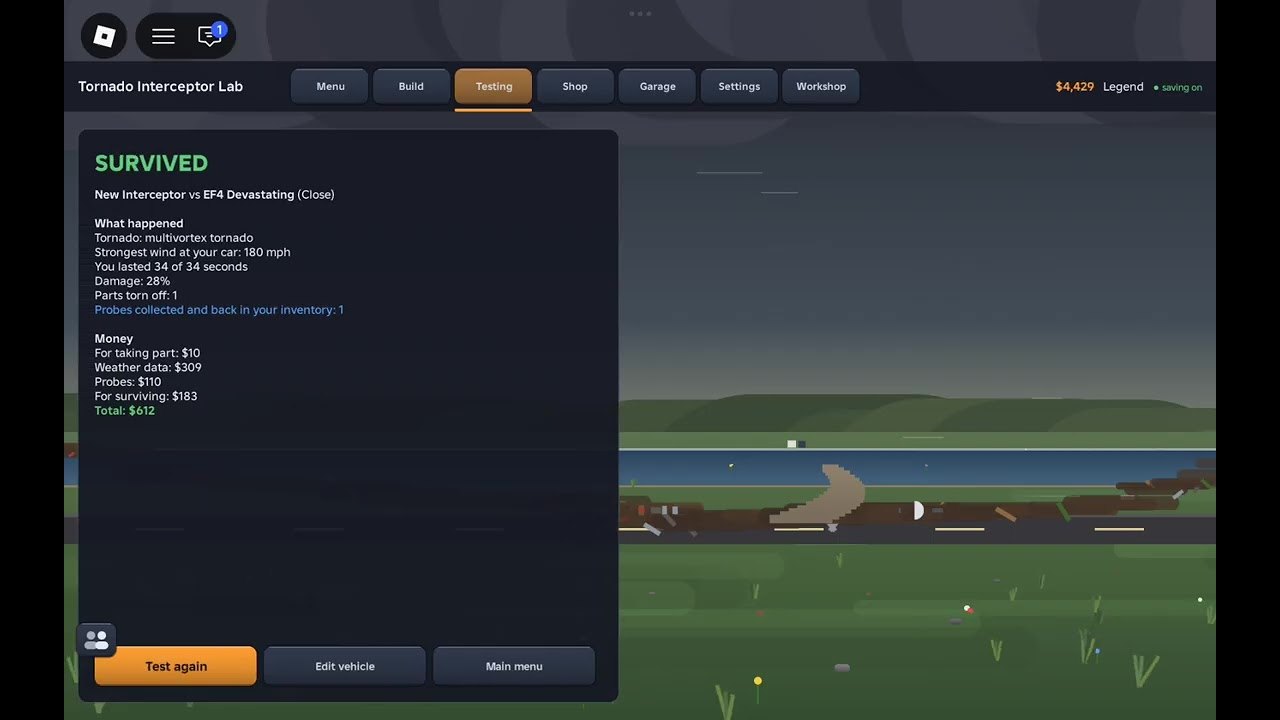
Intercepting in Tornado Interceptor Lab is a loop, not a coin flip. You scout the storm, approach with an escape lane already chosen, deploy flaps before spikes, commit for a short honest window, escape while you still own the steering, then log what the wind did to your build. This page turns that loop into a checklist you can run in every early-access session. Use it with Flaps Deployment, Threshold Survival, How to Build, and Controls.
Mindset for beta chases
- Servers hold up to about ten players—call lanes and do not ram allies into debris for a clip.
- EF ratings scale danger; rare EF6 events near 261+ mph are endgame tests, not tutorials.
- Your interceptor must already be legal and low: 2+ wheels, armor fill, engine, equipment (mesonet, camera turret). Fix that in Getting Started and How to Build before blaming the storm.
- Notebook > memory. Beta numbers drift; your logs keep skill portable across patches (Updates).
Pre-chase checklist (do not skip)
Run this in the bay or on the shoulder before you roll:
- Ride height / coverage — flaps still hide wheels? If not, abort to garage.
- Armor fill — no hollow critical faces.
- Engine — powered; you can articulate forward and reverse plans.
- Equipment — mesonet readable; camera turret free to pan.
- Deploy order drill — flaps, pause, spikes. Once. On purpose.
- Escape lane — name it out loud: road, ditch, ridge, reverse vector.
- EF selection — pick a rating you can learn from; save heroics for later.
- Player traffic — know where the other chasers are so you do not share the same wrong exit.
If any line fails, you are not intercepting—you are sightseeing into a wipe.
Phase 1: Scout
Scout is information work:
- Watch storm motion and likely path relative to roads you can actually drive.
- Note debris density and visibility; camera turret helps, but eyes first.
- Estimate EF feel from community calls and on-screen cues; when unsure, assume stronger.
- Decide whether this funnel is a practice intercept or a threshold push. Do not mix goals mid-run.
Scouting also means knowing when not to go. A rare EF6 is a spectator event until your coverage and escape habits are boringly reliable. Details in Threshold Survival.
Phase 2: Approach
Approach sets survival more than the commit does:
- Enter from a vector that preserves your named escape lane.
- Control speed; arriving hot with undeployed flaps is a self-own.
- Keep flaps ready but not necessarily deployed until the coverage moment—know your bind (Controls).
- Avoid stacking with another interceptor on the same narrow exit.
- Use mesonet cues if available; do not stare at UI so hard you miss terrain.
A clean approach looks boring. Boring is good.
Phase 3: Deploy
Deploy has a hard rule: flaps before spikes.
- Deploy flaps as you enter the wind that threatens uncovered wheels.
- Verify coverage mentally—if you built right in Flaps Deployment, wheels should be under the flap belt.
- Only then arm spikes for the commit window.
- If flaps fail to cover, do not “fix it” with spikes. Peel and return to bay.
Wrong order is the most common skilled-player mistake: spikes feel proactive, but uncovered wheels still eat threshold.
Phase 4: Commit
Commit is short and intentional:
- Hold a line that keeps the funnel observable without parking in the core on day-one builds.
- Watch for the moment wind authority exceeds your plan—that is the abort cue, not a dare.
- Camera turret frames the storm and your hood edge; use it to judge tilt and debris, not to film ego.
- Spikes support the hold; they do not replace escape judgment.
Community threshold talk often starts with coverage gains (~+30–50 when flaps truly cover wheels). Commit quality depends on that homework more than on spike count.
Phase 5: Escape
Escape starts before commit:
- Leave while steering still answers.
- Prefer the pre-named lane over improvising through debris.
- Retract or manage deployables as needed so they do not snag the peel (practice in bay).
- If another player blocks the lane, take the secondary plan you already imagined—not a panic spin.
A successful escape with modest data beats a spectacular disintegration.
Phase 6: Log
Log within two minutes or you will invent the story:
- EF rating (or best estimate)
- Coverage quality: wheels hidden yes/no
- Deploy order: correct / inverted / late flaps
- Failure first: armor, engine, tip-over, spike mistime, traffic
- One build change for next run
- One habit change for next run
Bring those notes into How to Build and Threshold Survival. Compare metas on Tier List only after several logged loops.
Full loop summary
Scout → Approach → Deploy (flaps then spikes) → Commit → Escape → Log.
Repeat on similar EF ratings until the loop is automatic. Then step EF difficulty one notch. Skipping steps to “save time” costs more time in garage rebuilds.
Team and server etiquette (max 10)
- Call your approach side.
- Do not steal someone’s only escape cut for a joke ram.
- Share EF calls honestly; hyping every storm as EF6 helps nobody.
- Bay space is shared—finish spike tests before blocking the door.
Linking the craft stack
- Still learning menus? Controls
- Coverage failing? Flaps Deployment
- Frame too tall? How to Build
- Wind habits? Threshold Survival
- First hour refresh? Getting Started
- Hub index? Guides Hub
- Promo noise? Codes — none verified yet; do not delay a chase for fake codes
Tornado Interceptor Lab intercepts reward systems thinkers. Pre-check the machine, name the exit, flaps then spikes, short commit, honest log. That loop turns beta chaos into skill.
Frequently Asked Questions
Quick answers about Tornado Interceptor Lab on Roblox.
What is the intercept loop in order?
Scout, approach, deploy flaps then spikes, commit, escape, and log. Skipping scout or escape planning is how most wipes start.
What belongs on the pre-chase checklist?
Confirm low coverage-ready flaps, armor fill, engine, equipment, a flaps-then-spikes drill, a named escape lane, a sensible EF target, and awareness of other players.
When should I deploy spikes?
After flaps are deployed and covering the wheels. Spikes support the commit window; they are not a substitute for coverage.
How do I practice without wasting good storms?
Drill deploy order and escape peels in the bay, then run the full loop on modest EF ratings before you push rarer high-end events like EF6.
What should I write in the log?
EF estimate, whether wheels stayed covered, deploy order quality, first failure mode, plus one build change and one habit change for the next run.
Can I intercept successfully in a full ten-player server?
Yes, if you call lanes and pre-name escapes. Traffic failures are still your responsibility—treat other chasers as moving terrain during approach.